
There's a moment every homeowner knows. You've repainted the walls, arranged the furniture just right, maybe even splurged on new cushions — and yet something still feels off. The room looks fine in photos but falls flat in person. Nine times out of ten, the culprit is the lighting.
Good lighting doesn't just illuminate a space. It shapes how a room feels at seven in the morning when you're making coffee, and how it looks at nine at night when friends come over for dinner. It's the difference between a house that functions and a home that genuinely draws people in.
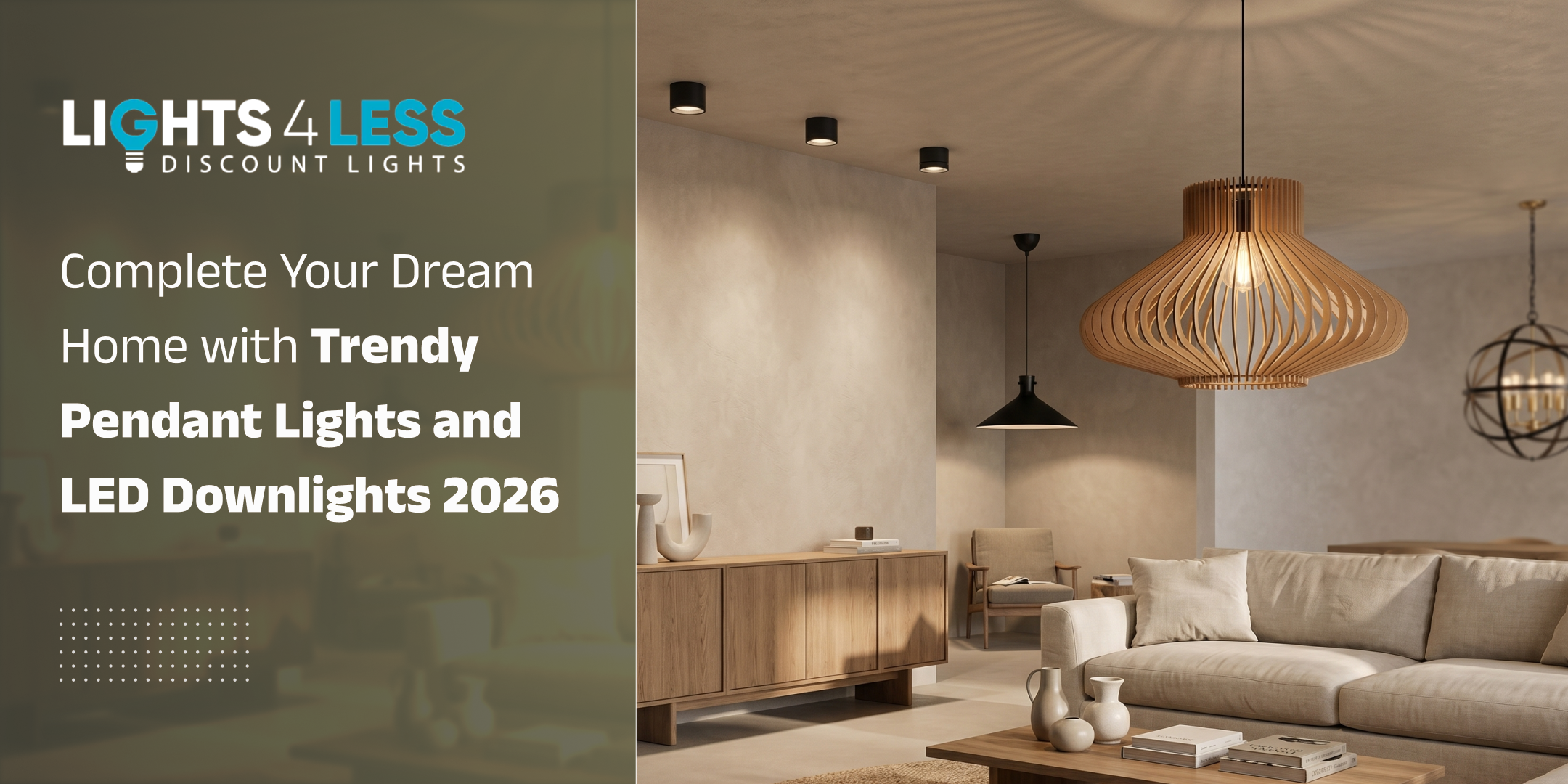
In 2026, Australian homeowners are thinking about lighting differently — and the combination of Pendant lights and LED downlights is leading the conversation. Here's everything you need to know to get it right.
Why Lighting Is the Most Overlooked Design Decision
Most renovation budgets go toward kitchens, bathrooms, and flooring. Lighting is often treated as an afterthought — something you sort out once everything else is done. That's a mistake, and most interior designers will tell you the same.
Lighting affects colour perception, spatial volume, mood, and even how rested you feel at home. Warm, layered light makes a room feel inviting. Harsh, flat light makes even beautiful rooms feel clinical. The fixtures themselves — whether that's a sculptural pendant above your kitchen island or a flush row of Smart LED downlights across your living room ceiling — become part of the architecture.
The good news is that getting your lighting right has never been more accessible. With brands like Fiorentino Lighting, available through Lights4Less, you don't have to choose between quality and affordability.
What Are LED Downlights, and Why Do They Matter
LED downlights are recessed ceiling fixtures that direct light downward in a focused beam. They're built into the ceiling rather than hanging from it, which gives rooms a clean, uncluttered look. For Australian homes — where open-plan living is standard and ceiling heights vary — they're incredibly versatile.
Here's why they've become the go-to choice for both new builds and renovations:
Energy efficiency that actually shows up on your bill. LEDs use up to 80% less energy than halogen equivalents. In a home with 20 or 30 downlights running daily, that's a significant saving over a year.
Longevity. A quality LED downlight can last 25,000 to 50,000 hours. Compare that to halogen bulbs, which typically need replacing every 1,000 to 2,000 hours, and the maths become compelling very quickly.
Better light quality. Modern LEDs offer excellent colour rendering, meaning the colours in your home look the way they're supposed to — your timber floors look warm, your artwork pops, your food looks appetising.
Dimmer compatibility. Most quality LED downlights now work with dimmers, giving you genuine control over ambience throughout the day.
The Best LED Downlights to Buy in 2026
What to Look For
Before diving into specific products, it helps to understand what separates a good LED downlight from a great one.
Colour temperature is the first thing to nail down. This is measured in Kelvins (K). Warm white (2700K–3000K) suits bedrooms, living rooms, and dining areas — it's the closest to natural candlelight and creates a relaxed, welcoming feel. Cool white (4000K–5000K) works well in kitchens, bathrooms, and workspaces where clarity matters more than ambience. Daylight (5500K–6500K) is bright and crisp, best suited to garages, laundries, or commercial settings.
CRI (Colour Rendering Index) measures how accurately a light source renders colour compared to natural light. A CRI of 80 is acceptable; 90 and above is excellent. For living spaces and areas where you want things to look their best, go for CRI 90+.
IP rating tells you how well the fixture is protected against dust and moisture. Bathroom and outdoor downlights need at least IP44 (splash-proof); fully exposed outdoor areas need IP65 or higher.
Beam angle affects how light spreads. A narrow beam (25–35°) creates focused pools of light — great for highlighting features or artworks. A wide beam (60°+) spreads light more evenly across a room.
Smart LED Downlights in Australia: The Next Level
Smart LED downlights have moved from novelty to mainstream in 2026. The ability to control colour temperature, brightness, and scheduling through an app or voice assistant has genuine practical appeal — not just for tech enthusiasts, but for anyone who wants their home to adapt to them rather than the other way around.
Fiorentino's smart LED downlight range integrates with major smart home platforms, including Google Home and Amazon Alexa. You can set scenes — "morning routine," "movie night," "dinner party" — and switch between them instantly. The scheduling function is particularly useful for Australian households: you can have your lights gradually brighten in the morning rather than switching on at full intensity, which makes a real difference to how you start the day.
For renters and homeowners alike, the appeal of smart LED downlights goes beyond convenience. Being able to dim lights from the couch, or adjust the colour temperature as the evening progresses, is the kind of small daily upgrade that genuinely improves how a home feels.
Our Pick: Key Considerations for Fiorentino Downlights
When selecting from the Fiorentino range at Lights4Less, look for:
- Adjustable colour temperature (switchable between warm, neutral, and cool white in a single fitting)
- High CRI (90+) for accurate, flattering light
- Dimmable compatibility — confirm your existing dimmer switch is LED-compatible
- Flicker-free driver technology — important for eye comfort, especially in workspaces
- IC-F rated for safe installation in insulated ceilings (common in Australian homes)
Pendant Lights: Where Function Meets Statement
If LED downlights are the workhorse of residential lighting, pendant lights are the showpiece. A well-chosen pendant does double duty — it provides targeted task or ambient light, and it anchors a space visually in a way few other design elements can.
The Pendant Light Trend in 2026
This year, Australian interior design has leaned into a few clear directions for pendant lighting:
Organic shapes and natural materials. Rattan, woven fibres, textured ceramics, and raw concrete pendants continue to grow in popularity. They add warmth and texture to spaces that might otherwise feel too polished or corporate.
Clustered and multi-pendant installations. Rather than a single pendant, many homeowners are grouping three or five at varying heights over kitchen islands or dining tables. The layered effect creates visual interest and makes a far stronger design statement.
Sculptural metalwork. Matte black and brushed brass remain dominant finishes in 2026. Geometric frames and architectural silhouettes are popular for those who want their light fittings to function as art pieces.
Oversized pendants as room anchors. A single large pendant — particularly in an entryway or above a dining table — can define the entire personality of a room. This trend works especially well in homes with higher ceilings.
Light Pendants in Australia: What to Know Before You Buy
Size matters. A pendant that's too small for the space will look lost; one that's too large will overwhelm everything around it. As a general guide:
- Over a dining table: the pendant shade should be roughly half to two-thirds the width of the table
- Over a kitchen island: allow 30–45cm of width per pendant if using multiple lights
- In an entryway: the bottom of the pendant should hang at least 2.1 metres from the floor
Cord length and ceiling height. Most standard Australian ceilings sit at 2.4–2.7 metres. For dining pendants, aim for the bottom of the shade to sit around 75–90cm above the table surface. For higher ceilings, the pendant becomes more of a feature, and you have more freedom to let it hang lower.
Matching finishes across the room. You don't need to match your pendants exactly to other fixtures, but they should complement the broader palette. A brushed brass pendant works beautifully alongside warm timber tones and matte white walls. Matte black pendants sit well in kitchens with darker cabinetry or industrial-inspired spaces.
How to Combine Pendant Lights and Downlights Effectively
This is where most people get stuck — not because the combination is complicated, but because it's easy to get wrong if you don't approach it with a plan. Here's the approach that works.
Think in Layers
Good residential lighting uses three layers:
- Ambient lighting — the general background light that fills a room. This is typically your LED downlights.
- Task lighting — directed, brighter light for specific activities: cooking, reading, working. Pendants over kitchen islands fall here.
- Accent lighting — light used to highlight features: artworks, architectural details, plants. Adjustable downlights or directional spots serve this purpose.
When you plan your lighting with all three layers in mind, the result feels intentional and sophisticated rather than randomly assembled.
Kitchen and Open-Plan Living Areas
In Australian kitchens, the combination almost designs itself. LED downlights provide general ambient light across the space. Pendants over the island or breakfast bar add task lighting and visual personality. If you have upper cabinetry, under-cabinet LED strip lights add a third layer that makes the whole kitchen feel properly finished.
A common mistake is hanging pendants and running downlights directly beneath them. This washes out the pendant's effect entirely. Instead, offset your downlights to the sides of the island and let the pendants do the work over the benchtop.
Suggested layout:
- 3 pendants over a 2.4m island, spaced evenly at roughly 60cm apart
- Downlights recessed into the ceiling around the perimeter of the kitchen, not directly above the island
- Under-cabinet strips on a separate switch or dimmer circuit
Dining Rooms
The dining table is the one area where a pendant should almost always be the dominant light source. A single large pendant, or a row of three smaller ones, positioned centrally above the table creates a natural gathering point and flatters food and faces alike.
LED downlights in dining rooms should be dimmable and positioned to light pathways and wall areas rather than compete with the pendant. When guests are seated, the downlights can dim right down while the pendant — itself on a dimmer — sets the tone.
Bedrooms
Bedrooms benefit from layered lighting more than any other room. A central pendant (or two bedside pendants in lieu of table lamps) provides ambient and decorative light. Recessed LED downlights on a dimmer give you flexibility for everything from getting dressed in the morning to winding down at night.
Consider warm white LEDs (2700K) throughout the bedroom — it's the most flattering and the most conducive to sleep.
Entryways and Hallways
An entryway pendant makes a powerful first impression. Pair it with a row of LED downlights along the hallway to guide people through the space. Keep the scale generous — entryway pendants often look better slightly oversized, as the height gives them room to breathe.
Practical Tips Before You Buy
Check your ceiling structure. Before purchasing any recessed downlight, confirm the depth of your ceiling cavity and whether it's insulated. IC-F rated fittings are essential if insulation is present.
Plan your circuits. If you want the ability to control pendants and downlights independently (which you almost certainly do), they need to be on separate circuits. This is a conversation to have with your electrician before any fittings are installed.
Buy a few extra. If you're using a specific LED downlight across multiple rooms, buy two or three extras and store them. LED driver technology evolves quickly, and an identical-looking fitting manufactured two years later may produce slightly different light — noticeable enough to bother you if one ever needs replacing.
Test before committing. If you're unsure about a pendant's scale, mock it up before buying. Cut a piece of cardboard to the approximate shade size and hang it temporarily with string at the intended height. It sounds low-tech, but it works.
Frequently Asked Questions
What are the best LED downlights to buy?
The best LED downlight for your home depends on what you're asking it to do. For living areas and bedrooms, look for warm white (2700K–3000K), high CRI (90+), dimmable fittings with flicker-free drivers. For kitchens and bathrooms, cool white or neutral white (3000K–4000K) with appropriate IP ratings works better.
LED downlight range at Lights4Less is designed with Australian homes in mind — IC-F rated for insulated ceilings, built for local voltage standards, and available in adjustable colour temperatures. If your home is set up for smart lighting, their smart LED downlights add app and voice control without requiring a full system overhaul.
The "best" downlight isn't the most expensive one. It's the one that delivers the right colour temperature, the right beam angle, and long-term reliability — ideally backed by a solid warranty.
How do you combine pendant lights and downlights effectively?
The key is positioning and purpose. Downlights should provide ambient light across the broader space; pendants should provide focused task light or serve as a visual centrepiece — or both.
Avoid placing downlights directly beneath pendants, as this cancels out the pendant's effect. Keep them on separate dimmer circuits so you can adjust each layer independently. In kitchens, offset downlights to the perimeter; in dining rooms, dim them right back when the pendant takes over.
Scale matters too. A pendant that's too small for the table beneath it will always look wrong, no matter how beautiful it is in isolation. Use the sizing guidelines above and, when in doubt, go slightly larger rather than smaller.
Ready to Transform Your Home?
The right lighting makes everything else in your home look better. It's not the most glamorous renovation, but it's arguably the highest-impact one — and with Fiorentino Lighting's range available at Lights4Less, you don't have to sacrifice quality for price.
Browse the full range of LED downlights, Smart LED downlights, and Pendant lights at Lights4Less, and if you need guidance on quantities, colour temperatures, or layouts, our team is happy to help you get it right the first time.
Your dream home is closer than you think — and it starts with better light.