
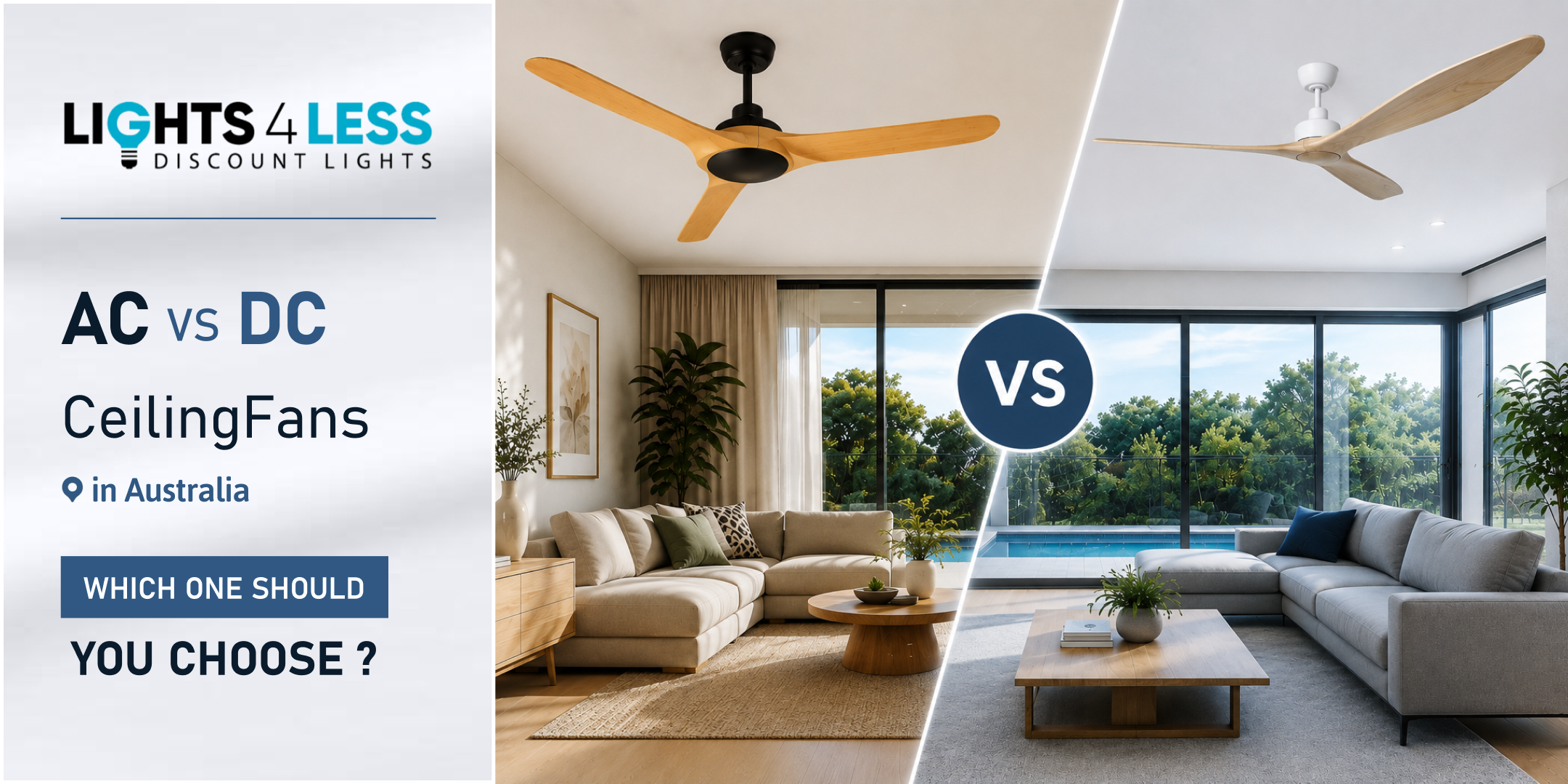
Choosing the right ceiling fan is one of the easiest ways to improve comfort and energy efficiency in your home. Whether you're building a new house, renovating a living space, or replacing an old fan, you'll likely come across two main motor types—AC ceiling fans and DC ceiling fans.
But which one is the better choice for Australian homes?
With Australia's diverse climate, from humid coastal regions to hot inland summers, selecting the right ceiling fan can help keep your home comfortable while reducing reliance on air conditioning. Understanding the differences between AC vs DC ceiling fans will help you make an informed decision based on your home's size, budget, energy usage and lifestyle.
In this guide, we'll compare AC ceiling fans and DC ceiling fans, explain their advantages and disadvantages, discuss where they're best used, and help you decide which option suits your Australian home.
What Are AC Ceiling Fans?
An AC ceiling fan (Alternating Current ceiling fan) is the traditional type of ceiling fan found in many Australian homes. These fans operate directly from your home's standard 230–240V AC electrical supply without requiring an internal converter.
For decades, AC ceiling fans have remained popular because they are reliable, widely available and generally more affordable than DC models. They are commonly installed in:
Living rooms
Bedrooms
Dining rooms
Outdoor alfresco areas
Covered patios
Rental properties
Modern AC ceiling fans are available in a wide range of sizes, finishes and styles, making them suitable for both classic and contemporary Australian homes.
Benefits of AC Ceiling Fans
Affordable Purchase Price
One of the biggest advantages of AC ceiling fans is their lower upfront cost. If you're installing multiple fans throughout your home or working within a renovation budget, AC models can offer excellent value.
Proven Reliability
AC motor technology has been used for decades and has built a strong reputation for dependable performance. With proper installation and maintenance, many AC ceiling fans provide years of reliable operation.
Wide Range of Styles
Whether you're looking for minimalist black ceiling fans, timber-look blades, coastal-inspired designs or ceiling fans with integrated LED lights, AC models are available in many styles to complement Australian interiors.
Suitable for Indoor and Outdoor Areas
Many AC ceiling fans are designed for indoor spaces, while weather-resistant models are suitable for covered outdoor entertaining areas, verandahs and alfresco zones.
What Are DC Ceiling Fans?
A DC ceiling fan (direct current ceiling fan) uses an energy-efficient DC motor instead of a traditional AC motor. Although these fans connect to your home's AC power supply, they include an internal converter that changes the electricity into DC power for the motor.
In recent years, DC ceiling fans have become increasingly popular across Australia due to their lower energy consumption, quieter operation and advanced control features.
They're an excellent choice for homeowners looking to improve energy efficiency without sacrificing comfort.
Benefits of DC Ceiling Fans
Excellent Energy Efficiency
One of the main reasons Australians choose DC ceiling fans is their lower electricity consumption.
Compared with many traditional AC ceiling fans, DC models typically require less power while still producing excellent airflow. This makes them particularly appealing for households aiming to reduce electricity bills or improve energy efficiency.
Quieter Operation
DC motors generally operate with less mechanical noise than traditional AC motors.
This makes them an ideal option for:
Bedrooms
Nurseries
Home offices
Study rooms
Media rooms
If you're sensitive to noise or prefer a quieter environment, a DC ceiling fan can provide comfortable airflow with minimal distraction.
More Speed Settings
Many DC ceiling fans include a greater number of speed settings than standard AC models.
Instead of being limited to three speeds, some DC fans offer five, six or even more settings, allowing you to fine-tune airflow throughout the year.
Remote Control Convenience
Many modern DC ceiling fans include remote controls as standard, making it easy to adjust:
Fan speed
Light functions (where applicable)
Timer settings
Reverse mode
Some premium models also offer compatibility with smart home systems, depending on the manufacturer.
AC vs DC Ceiling Fans: What's the Difference?
While both AC and DC ceiling fans perform the same basic function—circulating air to improve comfort—they differ in several important ways.
|
Feature |
AC Ceiling Fans |
DC Ceiling Fans |
|
Motor Type |
Alternating Current |
Direct Current |
|
Energy Efficiency |
Good |
Excellent |
|
Running Costs |
Moderate |
Lower |
|
Purchase Price |
Usually lower |
Usually higher |
|
Noise Level |
Quiet |
Generally quieter |
|
Speed Settings |
Usually 3 speeds |
Often 5–9 speeds |
|
Remote Control |
Optional |
Commonly included |
|
Smart Features |
Limited |
More common |
|
Ideal For |
Budget-conscious buyers |
Energy-efficient homes |
AC vs DC Ceiling Fans: Which Is More Energy Efficient?
Energy efficiency is one of the biggest factors influencing Australian homeowners when choosing a ceiling fan.
With electricity prices continuing to be an important household consideration, many people want cooling solutions that are both effective and economical.
In general, DC ceiling fans consume significantly less electricity than comparable AC ceiling fans while delivering similar levels of airflow.
This improved efficiency is achieved through the design of the DC motor, which requires less electrical energy to operate.
For households using ceiling fans regularly during Australia's warmer months, choosing an energy-efficient fan can contribute to lower ongoing electricity costs over time.
However, it's important to remember that actual energy consumption varies depending on factors such as:
Fan size
Motor design
Blade design
Speed setting
Daily operating hour
Always compare the product's technical specifications when evaluating different ceiling fan models.
When comparing AC vs DC ceiling fans, one of the biggest considerations for Australian homeowners is the long-term cost of running the fan. While the initial purchase price is important, ongoing electricity usage can have a greater impact over the life of the product.
Generally, DC ceiling fans are more energy-efficient than AC ceiling fans, meaning they often consume less electricity to deliver comparable airflow. This can make them a cost-effective choice for households where ceiling fans are used frequently during Australia's warmer months.
However, actual running costs depend on several factors, including:
Fan motor efficiency
Blade size and design
Speed setting
Daily operating hours
Local electricity rates
Manufacturer specifications
Rather than relying solely on motor type, compare the energy consumption details provided in the product specifications before making a purchase.
AC vs DC Ceiling Fans for Australian Homes
Australia's climate varies from tropical regions in the north to cooler southern states, so the best ceiling fan depends on your location, home design and lifestyle.
Coastal Homes
Homes near the coast often experience warm temperatures and higher humidity. Ceiling fans help improve airflow, making indoor spaces feel more comfortable.
When choosing a fan for coastal areas, look for:
Corrosion-resistant finishes
Suitable outdoor ratings where required
Quality construction designed for humid environments
Modern Homes
Many new Australian homes feature open-plan living spaces with high ceilings. Large ceiling fans with efficient motors can help circulate air effectively throughout these areas.
Apartments
Space is often more limited in apartments, making room size and ceiling height important considerations. Compact ceiling fans with efficient airflow are often suitable for bedrooms, living rooms and study areas.
Energy-Conscious Households
If reducing household energy consumption is a priority, many homeowners choose DC ceiling fans because of their energy-efficient operation and additional speed control options.
Common Mistakes to Avoid When Buying a Ceiling Fan
Buying a ceiling fan is a long-term investment, so it's worth taking the time to choose the right model for your home. Avoiding these common mistakes can help ensure better performance, comfort and value.
1. Choosing the Wrong Fan Size
One of the biggest mistakes is selecting a fan that's either too small or too large for the room.
A fan with a small blade span may not provide enough airflow in a large living area, while an oversized fan can overpower a compact bedroom.
Before purchasing, measure your room and compare it with the manufacturer's recommended room size.
2. Focusing Only on the Purchase Price
While budget is important, the cheapest ceiling fan isn't always the best value.
Consider factors such as:
Energy efficiency
Running costs
Warranty
Build quality
Noise levels
Available features
A slightly higher investment in a quality ceiling fan may provide greater comfort and lower operating costs over time.
3. Ignoring Ceiling Height
The installation height of a ceiling fan directly affects its performance.
For higher ceilings, an extension rod may help position the fan for optimal airflow.
For lower ceilings, a flush-mount or low-profile model is often the better option.
Always ensure the installation meets Australian electrical and safety requirements.
4. Installing an Indoor Fan Outdoors
Not every ceiling fan is suitable for outdoor use.
If you're installing a fan in an alfresco area, covered patio or verandah, make sure it's specifically rated for the intended environment. Outdoor-rated ceiling fans are designed to handle humidity and varying weather conditions better than standard indoor models.
5. Forgetting About Lighting Needs
If your room relies on a central ceiling light, replacing it with a standard ceiling fan may reduce overall illumination.
A ceiling fan with an integrated LED light can provide both cooling and lighting while helping maintain a clean, modern Look.
6. Not Checking the Available Features
Modern ceiling fans can include a range of convenient features, such as:
Remote controlsTimer functions
Reverse mode for summer and winter use
Dimmable LED lights (on compatible models)
Smart home compatibility (on selected models)
Consider which features will add value to your everyday use before making a decision.
Frequently Asked Questions
Are DC ceiling fans better than AC ceiling fans?
Both have their advantages. DC ceiling fans are generally more energy-efficient, quieter and offer more speed settings, while AC ceiling fans are often more affordable and remain a reliable choice for many Australian homes.
Which ceiling fan uses less electricity?
In most cases, DC ceiling fans consume less electricity than comparable AC models, making them a popular option for households looking to improve energy efficiency. Actual energy consumption will vary depending on the fan's specifications and how it's used.
Are AC ceiling fans still worth buying?
Yes. AC ceiling fans continue to be a practical option for many homeowners. They offer reliable performance and a wide variety of designs and are often available at a lower upfront cost.
Are DC ceiling fans quieter?
Many DC ceiling fans operate more quietly than traditional AC models, making them particularly suitable for bedrooms, nurseries, home offices and other areas where low noise levels are preferred.
Can I install a ceiling fan outdoors?
Yes, but only if the ceiling fan is designed and rated for outdoor or covered outdoor use. Always check the manufacturer's installation recommendations before purchasing.
Which ceiling fan is best for bedrooms?
Many Australians prefer DC ceiling fans in bedrooms because they often provide quieter operation, multiple speed settings and convenient remote controls.
Which ceiling fan is better for living rooms?
Both AC and DC ceiling fans can work well in living rooms. The best choice depends on the room size, how frequently the fan will be used, your preferred features and your budget.
Do ceiling fans help reduce air conditioning costs?
Ceiling fans don't lower the room temperature, but they improve air circulation and create a cooling sensation. Used alongside an air conditioner, they may allow you to set the thermostat slightly higher while maintaining comfort, which can contribute to lower energy use.
Should I choose a ceiling fan with a light?
A ceiling fan with an integrated LED light is a practical option if you want to combine lighting and cooling in one fixture. It's especially useful in bedrooms, living rooms and apartments where ceiling space is limited.
How long do ceiling fans last?
The lifespan of a ceiling fan depends on its build quality, installation and maintenance. Choosing a reputable brand, following the manufacturer's care instructions and having the fan installed by a licensed electrician can help maximise its service life.
Final Thoughts
When comparing AC vs DC ceiling fans, there isn't a single solution that suits every Australian home. The best choice depends on your budget, lifestyle, room size and how often you'll use the fan.
If you're looking for a reliable and cost-effective option, AC ceiling fans continue to offer excellent performance for many households. They're ideal for homeowners seeking dependable airflow and a wide range of stylish designs at an affordable price.
If energy efficiency, quieter operation and advanced features are your priorities, DC ceiling fans are often worth the additional investment. Their lower energy consumption and greater control options make them an increasingly popular choice for modern Australian homes.
Whether you're selecting a fan for a bedroom, living room, home office, alfresco area or a complete home renovation, choosing the right size, style and motor type will help you enjoy year-round comfort.
By understanding the differences between AC ceiling fans and DC ceiling fans, you can make a confident purchasing decision that suits your home's needs today and into the future.
At Lights4Less, you'll find a carefully selected range of stylish, energy-efficient ceiling fans designed to suit modern homes, renovations and new builds. Whether you need a quiet bedroom fan, a durable outdoor model or a feature fan for your living space, our collection offers options to suit a variety of interiors and budgets.