
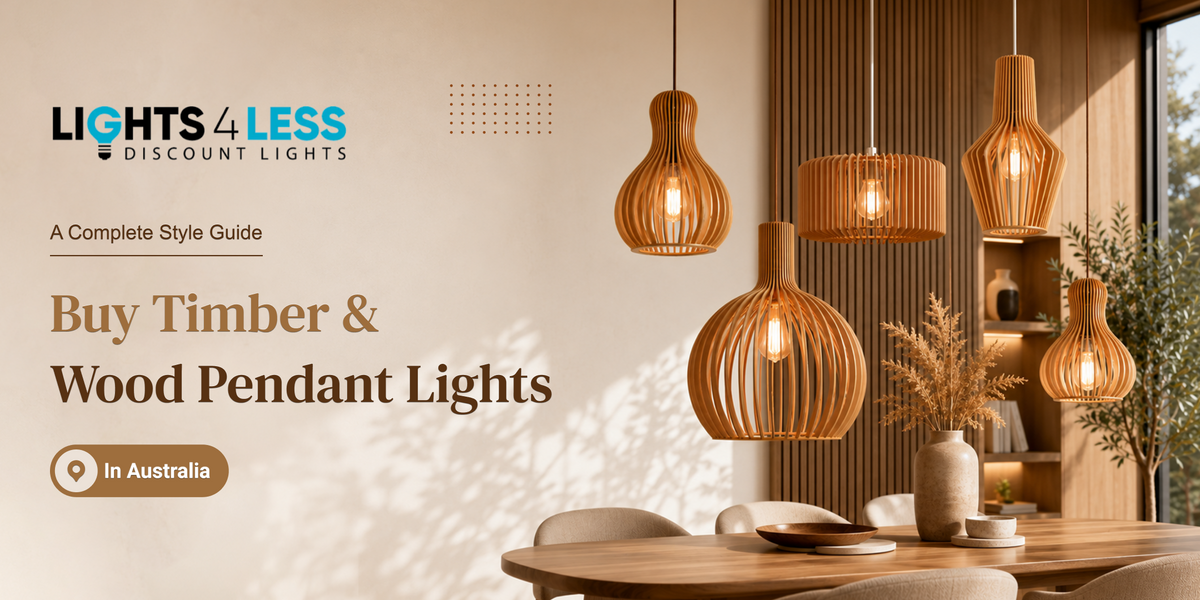
If you're looking for a lighting feature that feels warm, natural and effortlessly stylish, timber and wood pendant lights are an excellent choice for Australian homes. They can soften contemporary interiors, complement coastal décor and add character to minimalist spaces without overwhelming the room.
From a single timber pendant above a dining table to a cluster of wooden pendants over a kitchen island, the right design can transform both the look and atmosphere of your home.
In this complete guide, we'll explore how to buy timber and wood pendant lights in Australia, where to use them, which styles suit different interiors, how to choose the right size and height, and what to consider before purchasing.
Why Choose Timber & Wood Pendant Lights?
Timber pendant lights combine practical illumination with natural visual appeal. Unlike purely metal or glass fittings, wood introduces texture and warmth, helping create a more relaxed and inviting environment.
They are particularly suitable for Australian interiors because they work well with popular design influences such as:
- Scandinavian interiors
- Modern coastal homes
- Hamptons-inspired spaces
- Minimalist interiors
- Japandi design
- Bohemian décor
- Contemporary homes
- Modern-rustic interiors
Timber lighting can also complement other natural materials such as stone, linen, rattan and natural timber furniture. The result is a cohesive interior where the lighting feels like part of the overall design rather than an afterthought.
Australian homes often feature open-plan kitchens, dining areas and living spaces where lighting needs to provide both function and visual interest.
A timber pendant can help define these areas while creating a natural focal point.
1. Natural warmth
Wooden finishes bring an organic quality to interiors. This can be especially effective in modern homes featuring white walls, concrete surfaces or neutral cabinetry.
2. Versatile styling
Timber is available in a wide variety of finishes, colours and shapes. You can choose light natural wood for a Scandinavian aesthetic or darker timber for a more rustic and dramatic appearance.
3. Creates a focal point
A well-positioned pendant light naturally draws attention. Above a dining table or kitchen island, a timber pendant can become a key design feature.
4. Works with multiple interior styles
One of the biggest advantages of wood pendant lighting is its flexibility. The same material can look completely different depending on its shape, finish and surrounding décor.
5. Adds texture
If your room contains smooth surfaces such as stone benchtops, cabinetry and polished flooring, timber lighting can introduce visual texture and balance.
Popular Timber & Wood Pendant Light Styles
This directly supports the commercial buying journey. A customer deciding whether to buy a Scandinavian, rustic, modern or linear timber pendant benefits from this information.
However, I would shorten it slightly and link to deeper style-specific content where appropriate.
1. Scandinavian Timber Pendant Lights
Scandinavian-inspired lighting is known for simplicity, functionality and natural materials.
Look for:
- Pale timber finishes
- Clean lines
- Simple geometric shapes
- Minimal detailing
- Soft, warm illumination
These lights work beautifully in contemporary Australian apartments and homes with neutral colour palettes.
Pair a Scandinavian timber pendant with white walls, light timber flooring and simple furniture for a clean, airy appearance.
Best for: Modern, minimalist and Scandinavian interiors.
2. Rustic Wood Pendant Lights
For a warmer and more character-filled interior, consider rustic timber pendant lights.
These designs may feature:
- Darker timber finishes
- Visible wood grain
- Chunkier construction
- Natural imperfections
- Reclaimed or distressed styling
Rustic wooden pendants are ideal if you want your lighting to feel more substantial and visually prominent.
Best for: Farmhouse, rustic, country and modern-rustic interiors.
3. Modern Timber Pendant Lights
Modern timber pendants combine natural wood with contemporary shapes.
You may find designs featuring timber alongside the following:
- Matte black
- White
- Brass
- Metal
- Opal glass
This combination can make timber lighting feel sophisticated rather than overly traditional.
For example, a black and timber pendant can work particularly well in a contemporary kitchen where black tapware and cabinetry hardware are already present.
Best for: Contemporary Australian homes and modern open-plan interiors.
4. Rattan and Timber-Inspired Pendants
While technically different from solid timber, woven natural-fibre pendants are often considered alongside wooden lighting because they create a similar organic aesthetic.
Their open construction can allow light to filter through the shade, creating interesting patterns across walls and ceilings.
Best for: Coastal, boho, tropical and relaxed Australian interiors.
5. Linear Timber Pendant Lights
Linear pendant lights are particularly useful for long kitchen islands and rectangular dining tables.
Instead of using several separate fittings, a linear design creates a continuous visual feature.
This can help:
- Provide more evenly distributed illumination
- Complement long furniture layouts
- Create a strong architectural feature
- Reduce visual clutter
Best for: Kitchen islands, breakfast bars and long dining tables.
Where Should You Use Timber Pendant Lights?
One of the most important decisions is choosing the right location.
The best timber pendant isn't necessarily the most expensive or visually impressive one. It is the one that suits the room's size, layout and lighting requirements.
Timber Pendant Lights Over a Kitchen Island
The kitchen island is one of the most popular locations for pendant lighting.
A timber pendant can soften the harder surfaces commonly found in kitchens, including:
- Kitchen islands
- Dining tables
- Bedrooms
- Entryways
- Open-plan living areas
For larger islands, consider a linear timber pendant or a coordinated group of individual pendants.
Before buying, check the dimensions of your island and the total width of the fitting. The goal is to create visual balance without making the space feel crowded.
Timber Pendant Lights Above a Dining Table
A wooden pendant above the dining table can create an intimate and welcoming atmosphere.
Choose a fitting that relates to the shape of your table:
- Round table → round or central pendant
- Rectangular table → linear or elongated pendant
- Large table → larger pendant or coordinated cluster
The pendant should provide enough illumination for the table while remaining visually comfortable for people sitting underneath it.
A common starting point is approximately 75–90 cm between the bottom of the pendant and the tabletop, but the ideal height depends on the fitting, ceiling height and room layout.
Timber Pendant Lights in the Bedroom
Wooden pendants can be an attractive alternative to traditional bedside lamps.
You can install one on either side of the bed to create symmetry or use a single pendant as a decorative feature.
When choosing bedside pendants, consider:
- The size of your bedside tables
- The height of your ceiling
- The size of the pendant
- The direction of the light
- Whether you need task or ambient lighting
A smaller timber pendant generally works better in compact bedrooms, while larger sculptural designs can suit spacious master bedrooms.
Timber Pendant Lights in Entryways
Your entryway creates the first impression of your home, making it an ideal location for a statement pendant.
If you have a high ceiling or double-height entrance, a larger timber pendant can help fill the vertical space.
For standard-height ceilings, choose a more compact fitting that doesn't interfere with movement.
Timber Pendant Lights in Open-Plan Living Areas
In open-plan homes, pendant lighting can help visually define different zones.
For example, a timber pendant above the dining table can separate the dining area from the living room without using walls or partitions.
This is especially useful in Australian homes where open-plan kitchen, dining and living layouts are common.
What should I consider before buying
When you are ready to Buy Timber Pendant Lights in Australia, don't choose based on appearance alone.
Consider these important factors.
1. Room Size
The size of your room should influence the size of your pendant.
A small pendant in a large open-plan space may disappear visually. Conversely, an oversized fitting can dominate a compact room.
Measure:
- Room dimensions
- Ceiling height
- Table or island dimensions
- Available installation space
Always check the manufacturer's product dimensions before purchasing.
2. Ceiling Height
Ceiling height is particularly important when selecting pendant lighting.
For areas where people walk underneath the fitting, you need sufficient clearance. Australian home improvement guidance commonly recommends allowing around 2.1 metres of clearance in open walkways, while fittings over tables and benches can hang lower because the furniture provides a defined zone.
If you have low ceilings, consider a compact pendant or a design with an adjustable suspension system.
For high ceilings, you can explore larger or longer pendant designs.
3. Timber Colour
The timber finish should complement your existing interior.
Light timber
Ideal for:
- Scandinavian interiors
- Minimalist homes
- Coastal spaces
- Light-coloured kitchens
Medium timber
A versatile choice that works with many neutral colour schemes.
Dark timber
Best for:
- Rustic interiors
- Moody spaces
- Contemporary designs
- Rooms with darker furniture
Try to coordinate the timber with existing elements without making every wooden surface identical.
4. Pendant Shape
The shape of the fitting can change the entire look of the room.
Consider:
- Globe shapes for softer interiors
- Geometric designs for modern spaces
- Linear pendants for long islands
- Sculptural designs for statement areas
- Open-cage designs for a lighter visual effect
Think about the furniture below the pendant and choose a shape that complements it.
5. Light Globe and Colour Temperature
The globe you choose can significantly influence the appearance of timber.
For many living, dining and bedroom spaces, a warm-white light can enhance the natural warmth of wood and create a comfortable atmosphere.
For kitchens and task-focused areas, you may want to prioritise brightness and functional visibility while still maintaining a comfortable colour temperature.
If you want flexibility, consider whether the fitting is compatible with dimmable globes or a suitable dimming system.
How to Style Timber Pendant Lights in Australian Home
Choosing the pendant is only part of the process. Styling the surrounding space can make the lighting feature feel much more integrated.
Pair Timber With Natural Materials
Timber pendant lights work particularly well alongside the following:x
- Rattan
- Linen
- Stone
- Ceramic
- Cotton
- Natural timber
- Indoor plants
This creates a layered, organic aesthetic.
Mix Timber With Black
Black and timber is a popular combination for contemporary interiors.
A black metal frame with a timber shade can create contrast while maintaining warmth.
This style works particularly well when the room already includes black:
- Kitchen handles
- Tapware
- Furniture legs
- Window frames
- Decorative accessories
Combine Timber With Brass
For a more refined appearance, consider timber paired with brass or warm metallic accents.
The combination can work beautifully in dining rooms, kitchens and bedrooms where you want a balance between natural warmth and elegance.
Use warm lighting.
The right globe can make the timber finish look richer and more inviting.
For relaxing areas, warm lighting can complement the natural character of wood. Always check the product specifications to ensure your chosen globe is compatible with the fitting.
Timber Pendant Lights for Different Australian Interior Styles
Australia has a diverse range of interior design preferences, from coastal homes to modern city apartments.
Here's how to match your timber pendant with your décor.
| Interior Style | Recommended Timber Pendant |
|---|---|
| Scandinavian | Light timber, simple geometric shape |
| Coastal | Pale wood or natural woven finish |
| Modern | Minimalist timber with black or metal accents |
| Japandi | Simple, understated timber design |
| Hamptons | Light timber with elegant detailing |
| Bohemian | Woven natural fibres and organic shapes |
| Rustic | Dark timber with visible grain |
| Farmhouse | Chunky timber and distressed finishes |
| Contemporary | Sculptural or linear timber designs |
The key is to choose a pendant that supports the existing design rather than competing with it.
How Many Pendant Lights Should I Hang Over a Dining Table and
Kitchen Island?
The answer depends on the size and purpose of your space.
For a small dining table
One appropriately sized pendant may be enough.
For a large dining table
A larger pendant or multiple coordinated fittings may provide better visual balance.
For a kitchen island
Two or three smaller pendants can work well, while a linear pendant may provide a cleaner appearance.
For a bedroom
One pendant on each side of the bed can create a balanced look.
Avoid automatically adding more lights just because you have a large room. Consider your existing ceiling lights, downlights and natural daylight before deciding how many pendants you need.
Timber Pendant Lights vs Metal Pendant Lights
Both materials can work beautifully, but they create different visual effects.
Timber pendant lights are generally better suited to interiors where you want:
- Natural warmth
- Organic texture
- A relaxed atmosphere
- Scandinavian or coastal styling
- A softer visual appearance
Metal pendant lights may be preferable when you want:
- Industrial character
- Strong contrast
- A sharper contemporary aesthetic
- A more minimalist appearance
You don't necessarily have to choose one material throughout your home. Combining timber and metal in different rooms can create variety while maintaining a consistent design language.
Are Timber Pendant Lights Suitable for Australian Homes?
Yes, timber pendant lights can be suitable for Australian homes when the fitting is selected and installed appropriately for its intended location.
However, you should always check the product specifications before purchasing. Pay attention to:
- Electrical compatibility
- Installation
- Globe wattage
- Dimming
- Warranty
- Indoor/outdoor suitability
- Weight support
For hardwired pendant installation, use a licensed electrician and follow the manufacturer's installation requirements. Australian guidance also recommends checking with an electrician that the ceiling can support the weight of the selected fitting.
How to Clean and Maintain Timber Pendant Lights
Timber is relatively easy to maintain, but the correct cleaning method depends on the finish.
For general maintenance:
- Turn off the light and allow it to cool.
- Remove dust with a soft, dry cloth.
- Follow the manufacturer's cleaning instructions.
- Avoid harsh chemicals unless specifically recommended.
- Don't allow excessive moisture to remain on untreated timber.
- Inspect the fitting periodically for signs of damage.
Always refer to the manufacturer's instructions because different timber finishes require different care.
What to Check Before You Buy Timber & Wood Pendant Lights in Australia
Before placing your order, create a simple checklist.
Measure your space
Know the dimensions of your room, table or kitchen island.
Check ceiling height
Make sure the pendant will hang at a practical and visually appropriate height.
Choose the right style
Consider whether your interior is modern, coastal, Scandinavian, rustic or another style.
Select the right timber finish
Think about how the wood will coordinate with your flooring, cabinetry and furniture.
Check lighting requirements
Consider brightness, globe type and colour temperature.
Confirm installation requirements
Check whether professional electrical installation is required.
Review product specifications
Look at dimensions, materials, compatibility and warranty information.
Think about the long-term look
Choose a design that complements your home rather than simply following a short-lived trend.
Frequently Asked Questions
Are timber pendant lights good for modern homes?
Yes. Modern timber pendant lights can add warmth and texture to contemporary interiors, particularly when paired with minimalist shapes, black finishes or other modern materials.
Where is the best place to install a timber pendant light?
Popular locations include kitchen islands, dining tables, bedrooms, entryways and open-plan living areas. The ideal position depends on the room's layout and the purpose of the lighting.
What colour globe is best for timber pendant lights?
Warm-white lighting is often a popular choice for living and dining areas because it complements the natural warmth of timber. However, the best colour temperature depends on the room and the type of illumination required.
How high should a timber pendant hang above a dining table?
A common starting point is approximately 75–90 cm above the tabletop, although the final height should be adjusted based on the fitting's size, the room and personal preference.
Can timber pendant lights be used over kitchen islands?
Yes. Timber pendants can work particularly well over kitchen islands. Choose the number and size of fittings according to the island's dimensions and the amount of illumination required.
Are timber pendant lights suitable for coastal-style homes?
Absolutely. Light timber and natural finishes complement coastal interiors particularly well. Pair them with white, beige, soft blue, linen and other natural textures for a relaxed look.
How do I clean a timber pendant light?
Use a soft, dry cloth to remove dust and follow the manufacturer's care instructions. Avoid excessive moisture and harsh cleaning products unless they are specifically approved for the finish.
Final Thoughts
The right timber and wood pendant lights can do more than illuminate a room. They can introduce warmth, texture and personality while creating a strong visual connection between your lighting and interior design.
Whether you're styling a contemporary kitchen, renovating a coastal home or creating a relaxed Scandinavian-inspired bedroom, timber pendant lighting offers plenty of versatility.
Before you buy, consider your room size, ceiling height, interior style, timber finish, lighting requirements and installation needs. Most importantly, choose a pendant that complements the way you actually use your space.
If you're ready to bring natural warmth into your home, explore the range of timber and wood pendant lights available at Lights4Less and find a design that suits your Australian interior.