
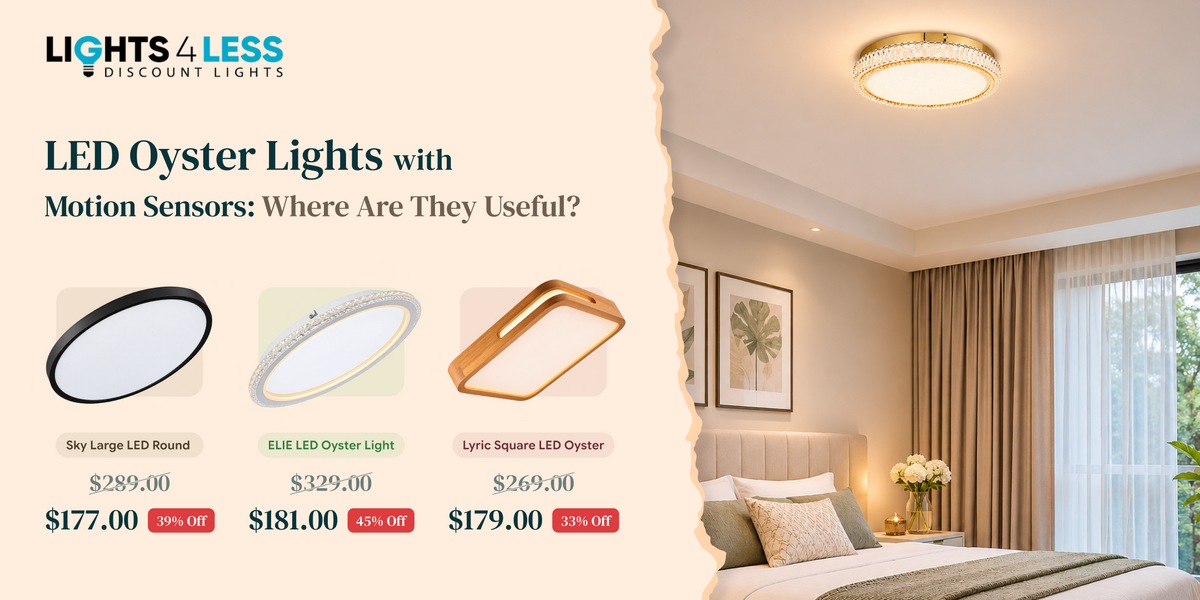
LED oyster lights with motion sensors automatically switch on when movement is detected, providing convenient lighting for hallways, garages, laundries, storage rooms and suitable entrance areas.
They are particularly useful in spaces where people frequently enter and leave, or where hands-free lighting makes everyday activities easier. However, choosing the right fitting involves more than simply checking whether it has a motion sensor. Brightness, detection coverage, operating time and installation suitability are equally important.
In this guide, we'll explore where motion sensor oyster lights work best, how PIR and microwave sensors differ, and what to consider when choosing a fitting for your home.
Where Are Motion Sensor Oyster Lights Useful?
LED oyster lights with motion sensors are useful in hallways, garages, laundries, walk-in wardrobes, storage rooms and suitable entrance areas. They automatically illuminate a space when movement is detected, making them convenient for areas where people frequently enter and leave. Before choosing a fitting, check its sensor coverage, brightness, operating settings and installation suitability.
What Is an LED Oyster Light with a Motion Sensor?
An LED oyster light with a motion sensor is a surface-mounted ceiling light that automatically switches on when movement is detected within its sensor's coverage area.
Unlike a standard oyster light operated using a wall switch, a motion sensor model can provide illumination when someone enters a room. This makes it a convenient option for hallways, garages, laundries and storage spaces where lighting is often needed for short periods.
Motion sensor functionality is not included in every LED oyster light. Sensor technology, detection coverage and operating settings vary between models, so check the individual product specifications before purchasing.
How Does a Motion Sensor Oyster Light Work?
A motion sensor oyster light detects movement within a specified area and activates the LED light automatically. When movement is no longer detected, the fitting may switch off after a preset period.
Depending on the model, settings may control how long the light stays on and whether it activates only when surrounding light levels fall below a certain threshold.
The way movement is detected depends on the sensor technology. PIR and microwave sensors work differently, so understanding these differences can help you compare suitable fittings.
PIR vs Microwave Motion Sensors: What's the Difference?
Motion sensor oyster lights can use different technologies to detect movement. PIR (passive infrared) and microwave sensors are two common options. Understanding their differences can help you assess which type may suit your room and installation requirements.
| Feature | PIR Sensor | Microwave Sensor |
|---|---|---|
| Detection method | Detects changes in infrared energy | Uses reflected electromagnetic signals |
| Movement detection | Responds to changes in its infrared detection field | Detects movement through changes in reflected signals |
| Installation consideration | Sensor position and direction of movement | Sensor position, sensitivity and coverage |
| What to check | Detection range and angle | Detection range and manufacturer specifications |
Sensor performance depends on the technology, design, sensitivity and installation position. The stated detection range does not guarantee that every movement will be detected equally well.
When comparing PIR and microwave sensors, consider the direction of movement, mounting position and potential obstructions. Always check the manufacturer's specifications to confirm that the sensor is suitable for your room layout.
Which Motion Sensor Should You Choose?
Neither PIR nor microwave sensors are automatically better for every application. The right choice depends on the room layout, intended installation position, detection coverage and sensor specifications.
Before choosing a fitting, compare the manufacturer's stated detection range, angle and operating characteristics to determine whether the sensor is suitable for the intended space.
Where to Use Motion Sensor Oyster Lights: A Room-by-Room Guide
Motion sensor LED oyster lights can be useful in different areas of the home, particularly spaces where people need convenient lighting without manually operating a switch. However, the right fitting depends on the room layout, ceiling height, sensor coverage and lighting requirements.
1. Hallways and Entrances
Hallways and entrances are practical locations for motion sensor LED oyster lights because they provide automatic illumination when someone approaches or walks through the space. This can be particularly useful when entering the home with shopping bags or moving through the hallway at night.
Before choosing a fitting, consider:
-
Sensor coverage: Check whether the detection range covers the full hallway or entrance.
-
Sensor position: Make sure the sensor can detect people approaching from the expected direction.
-
Light output: Choose sufficient brightness to illuminate the walking area without creating harsh glare.
-
Operating time: Check how long the light stays on after detecting movement.
For longer hallways, consider whether one fitting provides adequate coverage or whether additional lighting is needed.
2. Garages
A motion sensor LED oyster light can provide convenient general lighting in a garage, switching on when someone enters or moves through the space. It can be useful when carrying equipment, accessing storage or parking a vehicle.
However, general ceiling lighting may not provide enough focused illumination for detailed work at a workbench.
Before buying, check:
-
Light output: Make sure the fitting provides sufficient brightness for the garage size.
-
Detection coverage: Check whether the sensor can detect movement near the entrance and across the main walking areas.
-
Ceiling position: Consider whether vehicles, shelving or stored items could obstruct the sensor.
-
Task lighting: Add dedicated lighting over workbenches where more focused illumination is required.
-
Environmental suitability: Check the fitting's IP rating and manufacturer instructions if the garage is exposed to dust or moisture.
3. Laundries
Laundries can benefit from automatic lighting because people often move between appliances, cupboards and storage areas while carrying laundry or cleaning supplies.
Choose a fitting that provides suitable general illumination across the working area, with sensor coverage that suits the room's layout.
What to consider:
-
Compare the lumen output with the size and layout of the laundry.
-
Check whether appliances, cupboards or storage units could obstruct sensor detection.
-
Consider the operating time, particularly if laundry tasks take longer.
-
Confirm that the fitting is suitable for the moisture and environmental conditions of the installation area.
4. Walk-In Wardrobes and Storage Rooms
Walk-in wardrobes and storage rooms are often entered for short periods, making automatic lighting a convenient option. A motion sensor oyster light can illuminate the space when someone enters to access clothing, linen or stored household items.
Consider colour temperature and colour rendering when selecting lighting for wardrobes, particularly if you want clothing colours to appear more accurately. Check the fitting's specifications for available Kelvin and CRI values.
What to consider:
-
Check the fitting's diameter and height against the available ceiling space.
-
Confirm that the sensor detects movement when entering the wardrobe.
-
Compare the available Kelvin and CRI specifications.
-
Check whether shelves, cupboards or partitions obstruct sensor coverage.
-
Match the light output to the room's size and layout.
5. Bathrooms and Toilets
Motion sensor lighting can be convenient in bathrooms and toilets, particularly during night-time visits when switching on a bright light manually may be inconvenient.
However, not every LED oyster light is suitable for bathroom installation. Moisture exposure, the fitting's IP rating and the manufacturer's permitted installation locations must be considered before choosing a product.
Check the following before installation:
-
IP rating: Confirm that the fitting is suitable for the intended bathroom location.
-
Manufacturer instructions: Check whether the product is approved for the proposed installation environment.
-
Sensor operation: Consider whether the sensor will detect movement reliably from the bathroom entrance.
-
Lighting comfort: Choose an appropriate brightness and colour temperature for the space.
Always have bathroom lighting installed in accordance with applicable Australian electrical requirements by a suitably licensed electrician.
6. Stairways
Stairways need consistent lighting so people can see individual steps, edges and changes in floor level. A motion sensor LED oyster light may provide convenient automatic illumination when someone approaches the stairs.
Sensor placement is particularly important. The light should activate early enough to illuminate the steps before a person begins walking up or down.
When choosing a fitting, consider:
-
Detection position: Check that the sensor detects movement before someone reaches the first step.
-
Light distribution: Ensure the fitting provides adequate illumination across the staircase.
-
Obstructions: Check whether walls, doors or other objects could interfere with detection.
-
Operating time: Choose a suitable duration so the light does not switch off while someone is using the stairs.
For staircases with landings, turns or multiple levels, assess whether additional lighting is required.
7. Covered Outdoor Entrances
Motion sensor LED oyster lights may be suitable for covered outdoor entrances when the fitting is specifically designed for the installation environment. They can provide automatic illumination when someone approaches the front or side entrance.
However, being installed under a roof does not automatically protect a light fitting from moisture, dust or other environmental exposure.
Before purchasing, check:
-
IP rating: Confirm that the fitting is suitable for the expected exposure.
-
Outdoor suitability: Check the manufacturer's instructions for permitted installation locations.
-
Detection coverage: Consider the approach direction and the area that needs to be illuminated.
-
Sensor sensitivity: Check whether passing pedestrians, pets or nearby traffic could trigger the sensor.
-
Installation position: Ensure the sensor has a clear detection area.
Choose only a fitting that the manufacturer specifies as suitable for the intended outdoor location.
Room-by-Room Comparison: Choosing Motion Sensor Oyster Lights
Use the comparison below to identify which features matter most when choosing a motion sensor oyster light for different areas of your home.
| Location | Potential Benefit | What to Check Before Choosing |
|---|---|---|
| Hallways and entrances | Automatic illumination when entering or moving between spaces | Sensor range, detection angle and hallway coverage |
| Garages | Convenient general lighting when entering or moving around | Light output, ceiling height and additional task lighting |
| Laundries | Hands-free lighting during household tasks | Light output, sensor coverage and environmental suitability |
| Walk-in wardrobes | Automatic lighting when accessing clothing and storage | Fitting dimensions and unobstructed sensor coverage |
| Bathrooms and toilets | Convenient lighting for nighttime visits | IP rating and manufacturer-approved installation location |
| Stairways and landings | Automatic illumination when approaching steps | Sensor positioning and light distribution |
| Covered entrances | Lighting when arriving home after dark | Outdoor suitability and environmental rating |
The most suitable fitting depends on the room layout, required light output, sensor coverage and permitted installation conditions. Always check the individual product specifications before purchasing.
What to Check Before Buying LED Oyster Lights with Motion Sensors
Choosing a motion sensor LED oyster light involves more than comparing appearance or wattage. The fitting needs to provide suitable brightness, reliable movement detection and appropriate environmental protection for its intended location.
Before purchasing, compare the following features to make sure the light is suitable for your room and installation requirements.
1. Brightness and Light Output
Check the light output, measured in lumens, rather than comparing fittings by wattage alone. Consider the room's dimensions, ceiling height and layout when deciding whether a fitting will provide sufficient general illumination.
For larger spaces or areas used for detailed tasks, additional lighting may be required.
2. Colour Temperature and Colour Rendering
Colour temperature is measured in Kelvin (K) and affects the appearance of the light. Warmer lighting can create a softer atmosphere, while cooler lighting may be more suitable for certain utility spaces.
Also consider the colour rendering index (CRI) if accurately distinguishing colours is important, particularly in wardrobes and dressing areas. Check the available colour temperature and CRI in the product specifications.
3. Sensor Technology and Detection Coverage
Check whether the fitting uses PIR, microwave or another sensor technology. Compare the manufacturer's stated detection range and angle with the room layout.
Consider whether the sensor can detect movement from entrances and frequently used walking paths. Walls, cupboards, partitions and other obstructions may affect detection depending on the sensor design.
4. Operating Time and Daylight Settings
Check how long the light remains switched on after movement is detected. Some models have adjustable operating times, while others use factory-set settings.
Some fittings also include a daylight threshold that determines whether the light activates according to surrounding light levels. Check whether these settings are adjustable before purchasing.
5. IP Rating and Installation Suitability
Check the fitting's IP rating and the manufacturer's permitted installation locations.
This is particularly important for bathrooms, toilets and covered outdoor entrances, where moisture and environmental exposure may affect product suitability.
Do not assume that an indoor oyster light is suitable for every bathroom or outdoor location. Follow the manufacturer's installation instructions and applicable Australian electrical requirements.
6. Fitting Dimensions and Ceiling Space
Compare the fitting's diameter and height with the available ceiling space. Also consider the mounting requirements and whether the sensor will have an unobstructed detection area.
Check the product specifications before purchasing to ensure the fitting is appropriate for your intended installation.
Explore LED Oyster Lights at Lights4Less
Looking for suitable ceiling lighting for your home? Explore the LED Oyster Lights collection at Lights4Less and compare available fittings by brightness, colour temperature, dimensions and installation requirements.
If you specifically need automatic motion detection, check the individual product specifications to confirm whether the fitting includes an integrated motion sensor.
Choose a fitting that meets your lighting requirements and is suitable for its intended installation location.
Explore the LED Oyster Lights collection at Lights4Less.
Frequently Asked Questions
Where are motion sensor LED oyster lights most useful?
Motion sensor LED oyster lights are particularly useful in hallways, garages, laundries, storage rooms and suitable entrance areas. They provide automatic illumination when movement is detected, making them convenient in spaces that people enter and leave regularly. The right fitting depends on its sensor coverage, light output and installation suitability.
Can motion sensor oyster lights be used in bathrooms?
Some motion sensor oyster lights may be suitable for particular bathroom locations, but not every model is designed for moisture-prone environments. Check the product's IP rating, manufacturer instructions and permitted installation location before choosing a fitting. Installation must also comply with applicable Australian electrical requirements.
Do motion sensor oyster lights switch off automatically?
Generally, yes. They are designed to switch off after a period without detected movement. The operating time may be adjustable or factory-set, depending on the product.
Can one motion sensor oyster light cover an entire garage?
This depends on the garage dimensions, ceiling height, sensor coverage and fitting's light output. A larger garage may need multiple ceiling lights or additional task lighting.
What should I check before buying a motion sensor oyster light?
Compare the sensor technology, detection range, detection angle, operating time, lumen output, colour temperature and IP rating. Also check the fitting dimensions and manufacturer's installation instructions.
Do motion sensor oyster lights work during daylight?
Some motion sensor oyster lights include a daylight threshold that prevents activation when surrounding light levels are above a specified level. Whether this feature is adjustable depends on the individual product.
Can motion sensor oyster lights detect movement through walls?
Detection through walls depends on the sensor technology, fitting design and building materials. Do not assume that a sensor will detect movement through walls. Check the manufacturer's specifications for its detection characteristics and installation requirements.
Can a motion sensor oyster light stay on continuously?
This depends on the model and its operating settings. Some fittings may offer a manual override or continuous-light mode, while others operate using a preset automatic switching function. Check the product instructions before purchasing.
Final Thoughts: Choosing Motion Sensor Oyster Lights
LED oyster lights with motion sensors can make everyday lighting more convenient in areas such as hallways, garages, laundries and storage spaces.
The right fitting depends on the room layout, required brightness, sensor coverage and installation environment. Before purchasing, compare the product specifications and confirm that the selected fitting includes an integrated motion sensor if automatic operation is essential.
Explore the LED Oyster Lights collection at Lights4Less to compare available designs and specifications.