
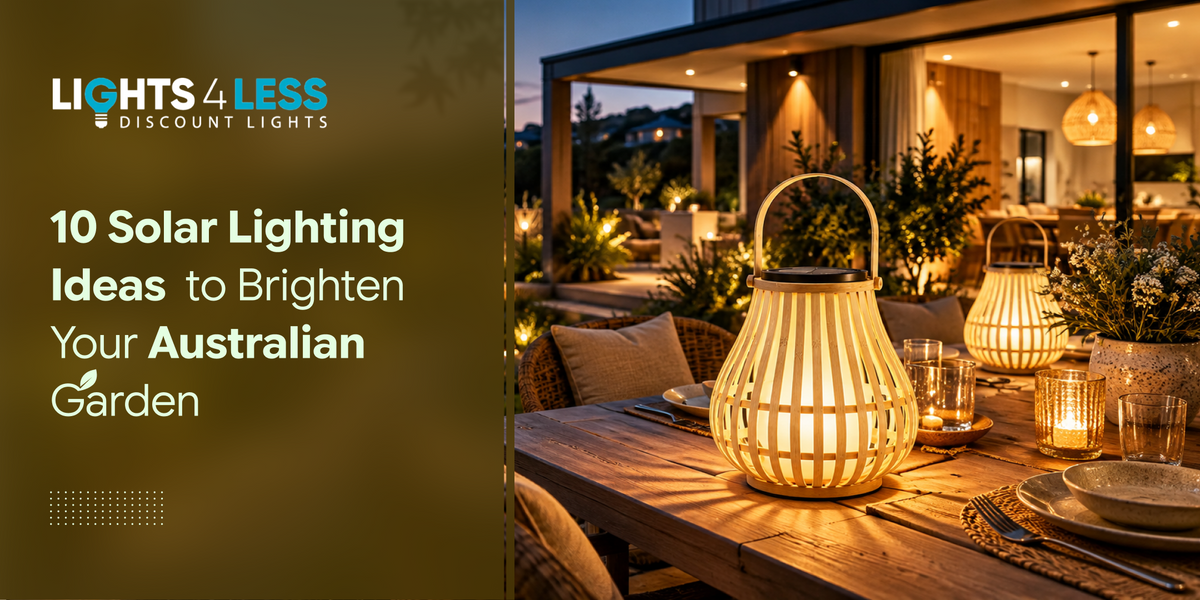
Solar garden lights can brighten pathways, highlight plants, define outdoor entertaining areas and add decorative ambience without the need for new electrical cabling. In this guide, we explore 10 practical solar lighting ideas for Australian gardens, along with tips for choosing, positioning and maintaining solar lights.
From highlighting garden paths and entertaining areas to creating a warm glow around plants and outdoor features, the right solar lighting can improve both the appearance and usability of your outdoor space.
If you are planning an outdoor lighting upgrade, here are 10 solar lighting ideas for Australian gardens to help you create a practical and inviting space.
1. Illuminate Garden Paths with Solar Path Lights

For the best result, avoid placing too many lights close together. A balanced layout can provide useful illumination while maintaining a clean garden design.
Solar Path Lights from Lights4Less
2. Highlight Plants and Garden Features
Use solar spotlights to draw attention to trees, shrubs, feature plants, sculptures or other garden elements.
Position the spotlight to highlight the shape, texture and height of the feature rather than spreading light across the entire garden. Directing the beam towards a tree trunk, textured foliage or a decorative feature can create a defined focal point after dark.
3. Add Solar Lights Around Outdoor Entertaining Areas
Australian gardens are often used for evening entertaining, especially during warmer months. Solar lights can help create a more comfortable atmosphere around patios, decks and outdoor seating areas.
Consider using solar lighting around:
- Outdoor dining areas
- Patio edges
- Decks
- Pergolas
- Garden seating
- BBQ areas
Rather than relying on one bright light, several lower-level lights can create a softer and more welcoming environment.
4. Create a Warm Glow with Solar Lanterns

Solar lanterns can add decorative lighting to gardens, balconies, patios and entertaining areas.
They are particularly useful when you want lighting that contributes to the overall atmosphere rather than providing strong task lighting.
Place solar lanterns near seating areas, along garden borders or around an outdoor dining space. Depending on the design, they can complement modern, coastal, rustic or traditional garden styles.
Add Decorative Solar Lighting with Leo
The Leo Solar Light from Lights4Less can be considered for outdoor areas where you want to introduce decorative points of light. Use solar decorative lighting around seating areas, garden borders or entertaining spaces to create a softer evening atmosphere.
Before installation, check the product specifications and choose a position where the solar panel can receive adequate daylight for charging.
Place decorative solar lights where they complement the surrounding landscaping and avoid positioning them where the light could create unnecessary glare.
Explore the Leo Solar Light
5. Use Solar Lights for Garden Borders and Entrances

Solar lights can also be used to visually define the edges of lawns, garden beds and landscaped areas.
Install them along the boundary between a lawn and garden bed to create a subtle outline after sunset. This can make the garden easier to navigate while also helping different landscaping areas stand out.
Keep spacing consistent for a neat appearance.
Solar post lights can be useful for adding illumination to garden entrances, boundary posts and other suitable outdoor structures. They can provide a defined point of light while avoiding the need for new electrical cabling in locations where mains-powered lighting may be less practical.
The SUNSOLAR LED Solar Light Post Top from Lights4Less is an option to consider when planning solar lighting for suitable posts or outdoor structures. Choose the mounting position carefully and make sure the solar panel receives adequate sunlight during the day for charging.
Tip: Check the product's mounting requirements and specifications before installation to make sure it is suitable for your particular post or outdoor structure.
Explore the SUNSOLAR LED Solar Light Post Top
6. Light Up Steps and Changes in Level
Outdoor steps and changes in ground level can become difficult to see after dark.
Solar step lights can provide additional visibility around stairs, retaining walls and raised garden areas. Depending on the product and installation method, they can be positioned on step risers, walls or nearby surfaces.
When choosing lighting for steps, focus on useful illumination and reduced glare rather than simply choosing the brightest light available. Position step lighting so it improves visibility without shining directly into people's eyes.
7. Add Solar String Lights for Outdoor Ambience
Solar string lights can transform patios, pergolas, balconies and garden entertaining areas with decorative points of light.
They can be wrapped around suitable structures, hung along a pergola or used to create a relaxed atmosphere around an outdoor seating area.
For Australian outdoor spaces, check the product's weather-resistance rating and follow the manufacturer's installation instructions before placing string lights outdoors.
8. Highlight Trees and Larger Garden Features
Large trees can become striking features at night when illuminated from below.
Place suitable solar spotlights near the base of a tree and angle them towards the trunk or canopy. The resulting shadows and highlights can add depth to the garden.
You can also use this technique for:
- Large shrubs
- Feature rocks
- Water features
- Garden walls
- Sculptures
- Decorative structures
The goal is not necessarily to light the entire feature but to highlight its most interesting characteristics.
9. Use Solar Lighting Around Outdoor Seating
If your garden includes a bench, fire-pit area or outdoor lounge, use low-level solar lighting to define the seating space and make it easier to move around after dark.
Place lights around the edges of the seating area rather than directly where people are sitting. This can help create a comfortable atmosphere while reducing unnecessary glare.
For entertaining spaces, warm-coloured light can create a softer and more relaxed appearance. Keep brighter or more functional lighting focused on pathways and areas where clearer visibility is needed.
10. Combine Different Types of Solar Lights
Layering different types of solar lighting can help balance practical illumination with decorative ambience. For example, you could use:
- Solar path lights for walkways
- Solar spotlights for trees and feature plants
- Solar lanterns around seating areas
- Solar string lights around pergolas
- Solar step lights around stairs
Combining practical and decorative lighting helps define different areas of the garden while keeping pathways, feature areas and entertaining spaces visually distinct.
How to Choose Solar Lights for an Australian Garden
Before buying solar garden lights, consider more than just the appearance.
| Garden Area | Suitable Solar Light | Main Consideration |
|---|---|---|
| Pathways | Path lights | Spacing and visibility |
| Trees/Plants | Solar spotlights | Beam direction and placement |
| Steps | Solar step lights | Glare and mounting position |
| Entertaining areas | Lanterns/string lights | Ambience and weather suitability |
| Garden borders | Border/path lights | Consistent placement |
| Feature areas | Spotlights | Beam direction and focal point |
Check Sunlight Exposure
Solar panels need adequate sunlight to recharge during the day. Avoid placing lights underneath dense trees, covered patios or other areas that remain heavily shaded.
Consider the Purpose
Choose the solar light based on its intended purpose:
- Illuminate a pathway
- Highlight a plant
- Improve visibility around steps
- Create ambience
- Add decorative lighting
The intended purpose will help determine the most suitable type of solar light.
Check Weather Resistance
Outdoor lights need to withstand local weather conditions. Check the manufacturer's specifications for the product's outdoor suitability and weather-resistance rating.
This is particularly important in areas exposed to rain, humidity, strong sunlight or coastal conditions.
Choose the Right Light Colour
Light colour can influence the atmosphere of your garden.
Warm white: Often suitable for entertaining areas, patios and decorative garden lighting.
Neutral or cool white: Can provide a cleaner appearance and may be useful where clearer visibility is required.
Choose according to the location and purpose rather than selecting a colour simply
because it looks attractive in a product photo.
Think About Light Placement
Avoid positioning lights where they shine directly into people's eyes or create unnecessary glare.
For paths, use consistent spacing. For feature lighting, experiment with angles to highlight plants and architectural elements without over-lighting the area.
How Many Solar Lights Do You Need?
The number depends on the application rather than simply the size of the garden.
| Application | Planning Approach |
|---|---|
| Short pathway | Use evenly spaced path lights |
| Long pathway | Prioritise consistent spacing and sunlight exposure |
| Feature tree | Use focused feature lighting rather than multiple general lights |
| Seating area | Combine ambient/decorative lights with functional illumination |
| Large garden | Layer pathway, feature and decorative lighting |
Solar Lighting vs Traditional Outdoor Lighting
| Solar Lighting | Mains-Powered Lighting |
|---|---|
| Useful where avoiding new cabling is desirable | Suitable where consistent powered illumination is required |
| Installation can be simpler, depending on the product | Requires electrical installation |
| Performance depends on sunlight and product design | Not dependent on daily solar charging |
| Useful for decorative and pathway applications | Can suit applications requiring higher or consistent output |
Tips for Getting Better Performance from Solar Garden Lights
Follow these simple steps to get the most from your solar lights:
- Place solar panels where they receive sufficient sunlight.
- Keep solar panels clean and free from dirt or debris.
- Avoid installing lights in heavily shaded locations.
- Position lights to minimise glare.
- Follow the manufacturer's installation and maintenance instructions.
- Check batteries and replace them when recommended by the manufacturer.
- Clean the light housing periodically, particularly after dusty or stormy weather.
Create a Brighter Australian Garden with Solar Lighting
Solar lighting can be a practical and decorative addition to Australian outdoor spaces. Whether you want to illuminate a garden path, highlight landscaping, improve visibility around steps or create a relaxed entertaining area, there are solar lighting options for different needs.
The key is to combine the right products with thoughtful placement. Start by identifying the areas that need illumination, consider how much sunlight they receive and then choose lighting that suits the purpose and style of your garden.
Frequently Asked Questions
Are solar lights suitable for Australian gardens?
Yes. Solar lights can be suitable for many Australian gardens, provided they are installed in locations where the solar panels receive adequate sunlight. Always check the manufacturer's specifications for outdoor use and weather resistance.
Can solar lights be left outside in the rain?
Outdoor-rated solar lights are designed for outdoor conditions, but their level of weather resistance varies. Check the product's IP or weather-resistance rating and follow the manufacturer's instructions.
What colour light is best for a garden?
Warm white is commonly used for decorative and entertaining areas because it creates a softer atmosphere. Neutral or cooler light can be useful where clearer visibility is the priority. The best choice depends on the purpose of the area.
How can I make solar garden lights brighter?
Make sure the solar panel receives adequate sunlight, keep the panel clean and ensure the light is positioned correctly. If the light has become noticeably dimmer over time, check whether its rechargeable battery needs replacement according to the manufacturer's instructions.
Explore solar lighting options for your outdoor space: