
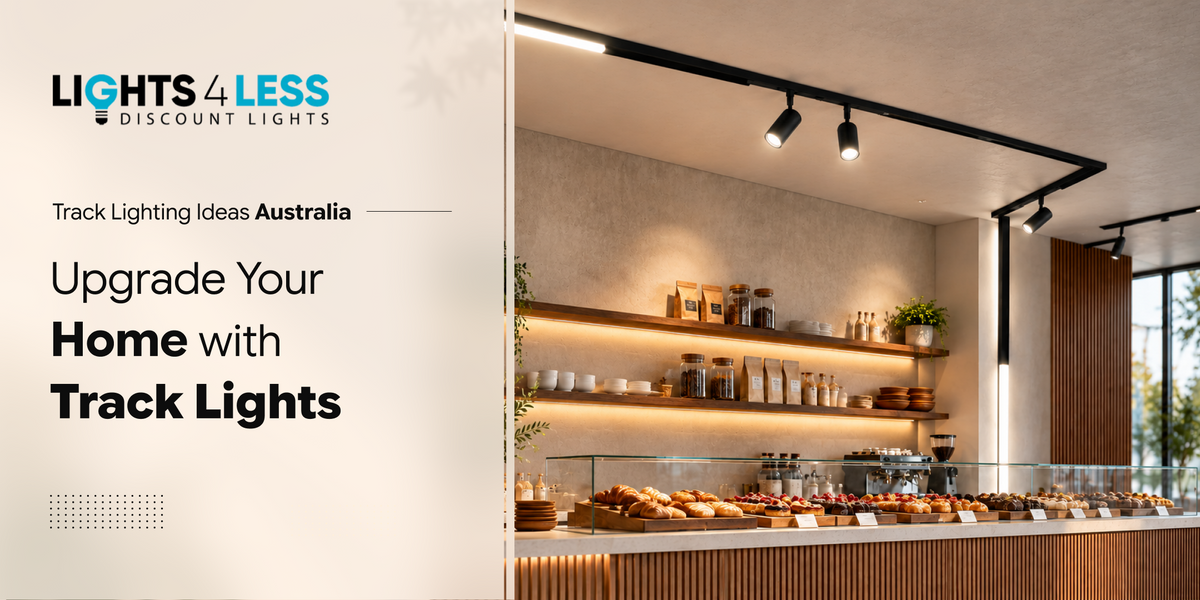
Track lighting can be a flexible choice for Australian homes when you need adjustable, directional light for kitchens, living rooms, hallways, dining areas or feature walls. Before choosing a system, check the track type, track-head compatibility, light output, beam angle, colour temperature, dimming requirements and the layout of your room.
Whether you are replacing an outdated ceiling fitting, highlighting artwork or improving task lighting, track lights can provide greater flexibility than many conventional ceiling lights.
In this guide, we explore track lighting ideas for Australian homes, where to use track lights, what to consider before buying and how to choose a style that suits your room.
What Is Track Lighting?
Track lighting consists of a ceiling- or wall-mounted track with individual light fittings attached along the track. Depending on the system, the light heads can often be adjusted to direct light towards specific areas.
This makes track lighting particularly useful when you want to illuminate several zones without installing multiple separate ceiling fittings.
Track Heads and Accessories
A track lighting system is made up of several components that work together to provide adjustable, directional lighting. Understanding these parts can help you choose a system that suits your room layout and lighting requirements.
-
Track: The track is the main rail mounted to the ceiling or wall. It provides the mounting and electrical connection points for compatible track heads. Tracks can be used in different layouts depending on the system and available accessories.
- Track heads: Track heads are the individual light fittings attached to the track. Their adjustable design allows you to direct light towards areas such as kitchen work surfaces, dining tables, artwork, shelving or other features.
- Connectors: Connectors join sections of track where the installation requires a change in direction or a larger configuration. The exact connector options depend on the track system you choose.
- Power-feed or live-end components: These components provide the electrical connection between the track system and the power supply. The required component depends on the track system and installation configuration.
- Other compatible accessories: Some track systems can be configured with additional components for different layouts or installation requirements. Always check that track heads, connectors, power-feed components and other accessories are compatible with the same track system before purchasing.

Explore the Track Lighting collection for track systems, track heads and related options available for Australian homes.
Track lighting can be used for:
- General room lighting
- Kitchen task lighting
- Highlighting artwork and decor
- Illuminating dining areas
- Lighting hallways and entrances
- Highlighting shelving and display areas
- Creating accent lighting in living spaces
- Directing light towards work or study areas
Why Choose Track Lighting for an Australian Home?
One of the main advantages of track lighting is its directional nature. Instead of distributing all the light in one direction from a central fitting, adjustable heads can help direct illumination where it is needed.
A Practical Track Lighting Example
For an open-plan kitchen and dining area, a track lighting system can be positioned to provide light across different zones rather than directing every light head towards the center of the room.
For example, some adjustable heads could be aimed towards the kitchen work area, while others could illuminate the dining table, shelving or a feature wall. This approach can help create a more purposeful lighting layout while allowing different areas to receive focused illumination.
For a hallway, the same principle can be applied by directing individual heads along the walkway or towards artwork and wall features. In a living room, heads can be positioned towards seating areas, shelving or decorative features depending on the room layout.
1. Flexible Light Direction
Adjustable track heads allow you to change the direction of the light. This can be useful when your room layout changes or when you want to highlight a different feature.
2. Suitable for Different Rooms
Track lighting can work across many areas of the home, including kitchens, living rooms, hallways and dining spaces.
3. Modern and Versatile Styling
Track lighting is available in different finishes and designs, making it possible to choose a fitting that complements contemporary, minimalist, industrial or other interior styles.
Track Lighting Ideas for Different Rooms
The best track lighting arrangement depends on the room, ceiling height, furniture layout and the type of lighting you need.
Kitchens
The kitchen is one of the most practical places to use track lighting.
Consider directing individual light heads towards:
- Kitchen bench tops
- Food preparation areas
- Kitchen islands
- Sinks
- Open shelving
- Dining or breakfast areas
For a kitchen, think about task lighting first. Light should be directed towards the working surfaces rather than simply illuminating the center of the ceiling.
If the track is installed above an island or bench top, consider how the light falls onto the surface and whether cabinets or your own position could create shadows.
Living Rooms
In living rooms, track lights can provide both practical illumination and accent lighting.
You can direct individual heads towards:
- Artwork
- Feature walls
- Bookshelves
- Decorative objects
- Seating areas
- Architectural features
For a relaxed living environment, consider the desired colour temperature and overall brightness rather than relying only on the appearance of the fitting.
Hallways
Hallways can benefit from directional lighting because track heads can illuminate different sections of a longer space.
Instead of aiming every light directly downwards, you could direct some heads towards artwork, wall features or other areas that you want to emphasise.
For narrow hallways, consider the track's position carefully so the fitting does not visually overwhelm the space.
Dining Areas
Track lighting can be used to focus light towards a dining table or nearby feature.
If the dining table is the main focal point, position the light so it provides useful illumination without creating uncomfortable glare for people sitting around the table.
Bedrooms
Track lighting can provide general illumination in bedrooms, while adjustable heads can be directed towards wardrobes, dressing areas or artwork.
For bedrooms, softer and more comfortable lighting may be preferable to very bright, highly directional illumination.
Track Lighting for Open-Plan Australian Homes
Open-plan homes often combine several functions within one large area.
For example, a single space might contain:
- A kitchen
- Dining area
- Living room
- Walkway
- Display or feature area
Track lighting can help divide these zones visually by directing individual light heads towards different areas.
Instead of aiming every light towards the centre of the room, consider the activities and features that need illumination.
How to Choose Track Lighting
Choosing track lighting involves more than selecting a colour or style. Consider the room's dimensions, ceiling height, layout and lighting requirements.
Room Size
Start by assessing the area you need to illuminate.
A small hallway and a large open-plan living area will have very different lighting requirements. Consider how many areas need focused illumination and whether one track is sufficient.
Ceiling Height
Ceiling height affects how the light reaches the surfaces below and how large the fitting feels within the room.
For lower ceilings, consider the overall profile and projection of the fitting. For higher ceilings, pay attention to the light output and beam distribution required at the working or display surface.
Light Output
Lumens indicate the amount of visible light produced by a light source.
Rather than choosing a fitting based only on wattage, consider the lumens, room size and intended use.
A kitchen work area, for example, may require a different lighting approach from a decorative hallway.
Compatibility
Before buying track lighting, check that the track, track heads, connectors, power-feed components and other accessories are designed to work together. Track systems can use different configurations, so components from different systems may not necessarily be compatible.
If you are adding new track heads or accessories to an existing installation, check the specifications of your current track system before purchasing. Confirm the track type, compatible fittings and required accessories to avoid buying components that cannot be used together.
For Lights4Less products, always check the individual product specifications and compatibility information before purchasing.
Colour Temperature
Colour temperature affects the appearance and atmosphere of a room.
Common LED lighting options include:
- Warm white: creates a warmer and more relaxed atmosphere
- Neutral white: provides a more balanced appearance
- Cool white: produces a crisper, brighter-looking effect
The right option depends on the room and the atmosphere you want to create.
Beam Angle
Beam angle affects how broadly or narrowly light is distributed.
A narrower beam can be useful for highlighting a specific feature, while a wider beam can provide broader illumination.
If you are using track lights to highlight artwork or decorative features, beam angle deserves particular attention.
Glare
Directional lighting can create glare if the light source is positioned poorly.
Before installation, consider where people will sit, walk or work and how the light will appear from different viewing angles.
Match the Finish to Your Interior
Track lighting is available in different finishes and styles.
Black track lights can complement modern and industrial interiors, while white fittings can blend more easily into light-coloured ceilings.
The best choice depends on whether you want the fitting to stand out as a design feature or blend into the room.
Single-Circuit vs Three-Circuit Track Lighting
Before choosing track lights, check which track system you need. Lights4Less offers both single-circuit and three-circuit track lighting options, along with compatible track heads and accessories.
Single-Circuit Track Lighting
Single-circuit track lighting is suitable when all track lights are controlled together as one lighting circuit. Before purchasing, check that the track heads, track and accessories are compatible with the same system.
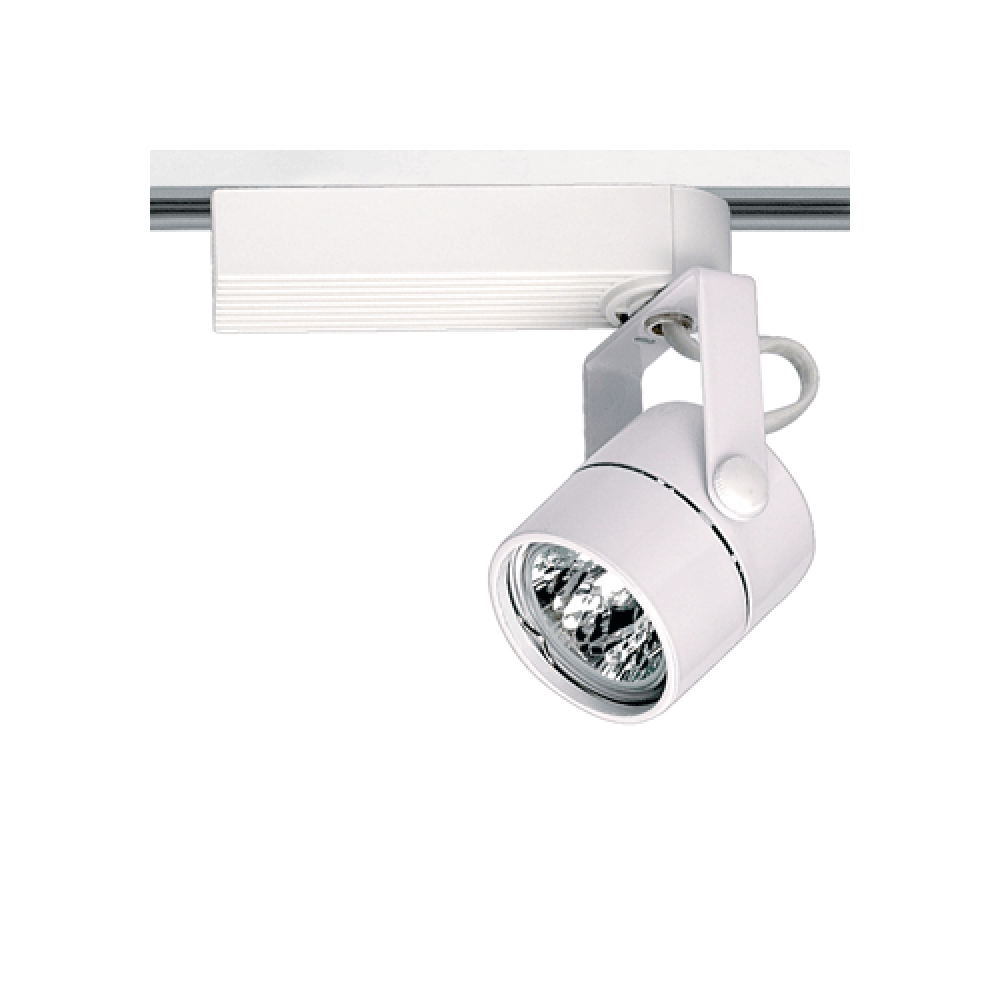
Browse the Single Circuit Track Heads collection.
Three-Circuit Track Lighting
Three-circuit track lighting allows compatible track heads to be arranged across separate circuits within the same track system, providing more control over different groups of lights. Lights4Less has a dedicated Three Circuit Tracks & Accessories collection, including tracks, connectors, live ends, suspension components and other accessories.
Before purchasing: Always check compatibility between the track, track heads, connectors and other accessories. If you are unsure which system is suitable for your installation, consult a qualified electrician.
Track Lighting Buying Checklist
Before buying track lighting, check the following points to make sure the system suits your room, lighting requirements and installation.
| What to Check | What to Consider |
|---|---|
| Track system | Confirm whether you need a single-circuit or three-circuit system. |
| Compatibility | Make sure the track, track heads and accessories are designed to work together. |
| Light output | Compare the lumens with the size and intended use of the space. |
| Beam angle | Consider whether you need focused illumination or a wider spread of light. |
| Colour temperature | Choose a colour temperature that suits the room's function and desired atmosphere. |
| Dimming | Check whether the fitting, driver and proposed dimmer are compatible if dimming is required. |
| Room layout | Consider furniture, work surfaces, walkways and areas you want to highlight before positioning the track. |
| Finish and style | Choose a finish that complements the interior or creates a deliberate feature. |
| Installation | Check the installation requirements and arrange qualified electrical work where required. |
Taking these points into account before purchasing can help you avoid compatibility issues and choose a track lighting system that works with your room layout and intended lighting application.
Track Lighting for Artwork and Feature Walls
Track lights can be particularly useful when you want to highlight artwork or a feature wall.
Positioning is important. The goal is to illuminate the artwork effectively without creating excessive reflections or glare.
For valuable artwork or materials that may be sensitive to light, check the specific lighting requirements before installation.
Track Lighting vs Traditional Ceiling Lighting
Track lighting and conventional ceiling lights serve different purposes.
| Feature | Track Lighting | Traditional Ceiling Light |
|---|---|---|
| Light direction | Often adjustable | Usually fixed |
| Highlighting features | Well suited | Depends on fitting |
| Multiple lighting zones | Possible within one system | Usually more limited |
| Layout flexibility | High | Depends on fitting |
| Accent lighting | Well suited | Depends on design |
| Styling | Available in multiple designs | Wide range of styles |
The right choice depends on your room layout and how you want the light to function.
Common Track Lighting Mistakes to Avoid
Even a stylish track light can perform poorly if it is positioned incorrectly.
Installing Without Considering the Room Layout
Think about furniture, walkways, work surfaces and feature areas before deciding where the track should go.
Using the Same Direction for Every Light Head
If every light head points towards the same location, other parts of the room may remain poorly illuminated.
Use the adjustable nature of the system to create a more balanced lighting arrangement.
Choosing Based Only on Appearance
A track light may look ideal but still be unsuitable if its light output, beam angle or colour temperature does not suit the room.
Ignoring Glare
Consider the viewing angles from sofas, dining chairs, work areas and walkways.
Forgetting About Installation Requirements
Electrical installation should be assessed before purchasing or installing lighting. Where electrical work is required, use a qualified electrician and follow applicable Australian requirements.
How to Create a Layered Lighting Scheme with Track Lights
A comfortable lighting design often combines different types of lighting rather than relying on one fitting.
You can combine:
Ambient lighting
Provides overall illumination throughout the room.
Task lighting
Provides focused light for activities such as cooking, reading or working.
Accent lighting
Highlights artwork, decor, shelving or architectural details.
Track lighting can contribute to task and accent lighting while working alongside other fixtures that provide general illumination.
Frequently Asked Questions
Is track lighting suitable for Australian homes?
Yes. Track lighting can be suitable for many Australian homes where adjustable, directional illumination is useful. It can be used in kitchens, living rooms, dining areas, hallways, bedrooms and spaces where you want to highlight artwork or other features. The right system depends on the room layout, ceiling height, lighting requirements and installation conditions.
What is the difference between single-circuit and three-circuit track lighting?
Single-circuit and three-circuit track lighting are different track-system configurations. Before purchasing, check which system is suitable for your planned installation and make sure the track heads and accessories are compatible with that system.
Can track lighting be used to highlight artwork?
Yes. Adjustable track heads can direct light towards artwork and feature walls. Beam angle and positioning are important because poorly positioned directional lighting can create reflections or glare. For valuable or light-sensitive artwork, check the specific lighting requirements before installation.
Do track lights need to be installed by an electrician?
Where electrical work is required, installation should be carried out by a qualified electrician and comply with applicable Australian requirements. Check the installation instructions and requirements for the specific track lighting system before starting work.
Can track lighting replace a ceiling light?
It can in some applications, but it depends on the room, track system, light output and desired lighting result. Track lighting can provide directional and multi-zone illumination, while other ceiling fittings may be more suitable when broad, uniform illumination is the priority.
Can track lighting be used with other types of lighting?
Yes. Track lighting can be combined with pendant lights, downlights, wall lights and other fittings to create a layered lighting scheme. This allows different fixtures to provide ambient, task and accent lighting for different areas of the room.
Shop Track Lighting for Australian Homes
Looking for a flexible lighting solution for your home?
Explore the available track lighting and track light fittings at Lights4Less to find options that suit your room, interior style and lighting requirements.
Before choosing a fitting, consider your room size, ceiling height, desired light output, colour temperature, beam angle, finish and installation requirements.
Final Thoughts
Track lighting can be a practical and stylish choice for Australian homes when it is selected and positioned according to the room's requirements.
From illuminating kitchen work surfaces to highlighting artwork in a living room, adjustable track lights provide flexibility that can be useful across different areas of the home.
If you are ready to update your home's lighting, explore the Lights4Less track-lighting range and choose a fitting that works with both your space and your lighting needs.